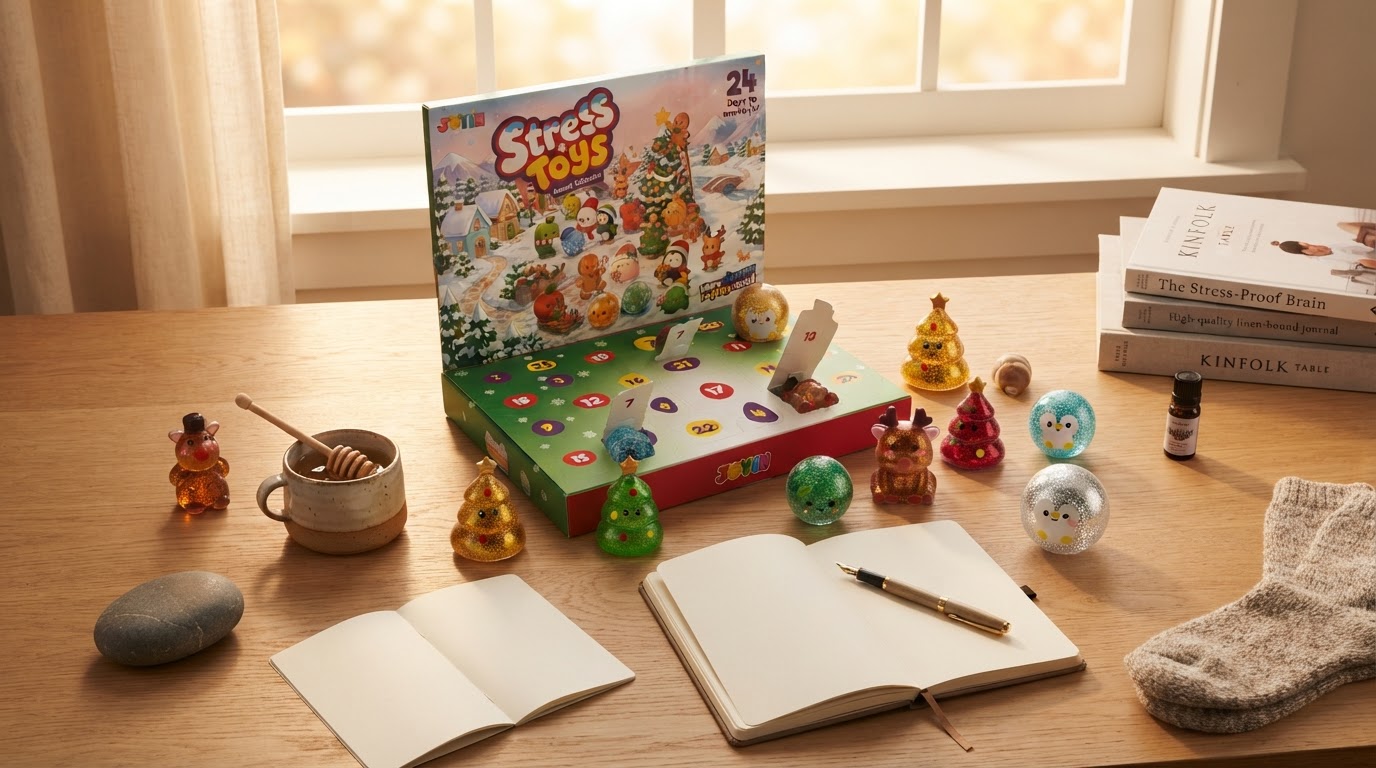
Squeeze Advent Calendar Strategies for Adult Stress Management
 Maya ChenContributing Editor
November 1, 2026. This analysis examines the efficacy of tactile sensory tools in mitigating cortisol spikes during high-pressure seasonal windows. It is written for professionals and consumers seeking evidence-based methods for daily tension reduction.
The Physiological Cost of Seasonal Burnout
The conventional wisdom says that the holidays are a time of rest, yet clinical observations suggest the opposite. For most adults, the final quarter of the year represents a concentrated period of financial strain, social obligation, and disrupted routines. Here's the part nobody talks about: the brain does not distinguish between a looming work deadline and the self-imposed pressure of a "perfect" holiday. Both trigger the same sympathetic nervous system response. According to Living on the Spectrum, the use of fidget and sensory tools provides a daily stress-relieving activity that serves as a necessary cognitive break for both neurodivergent individuals and typical adults. This isn't just about play; it is about providing the nervous system with a non-destructive outlet for restless energy. When the hands are engaged in a repetitive tactile task, the prefrontal cortex can momentarily disengage from the loop of ruminative thoughts that characterize chronic stress. Traditional methods of stress management often require large blocks of time—yoga classes or therapy sessions—which are the first things to be cut when a schedule tightens. The failure of these high-maintenance self-care models is why micro-interventions, such as a stress relief advent calendar for adults, have gained traction. By breaking down the intervention into a controlled, 30-second daily interaction, the barrier to entry for stress management is effectively removed. We are seeing a shift away from the idea that wellness must be an elaborate production, moving instead toward functional, accessible tools that fit into the literal palm of a hand.
Tactile Engineering in the Squeeze Advent Calendar
Run the math: twenty-four days of high-density tactile input versus the cumulative effect of unmanaged anxiety. The Squeeze Advent Calendar is designed around the specific physics of resistance and recovery. Unlike cheap foam alternatives that lose structural integrity after a few uses, these squishy surprises are engineered for repeated compression. This durability is critical because the stress-relief mechanism relies on the consistent feedback the material provides to the mechanoreceptors in the fingertips. The sensory toy advent calendar trend is not merely a byproduct of nostalgia; it is a response to the increasingly digital nature of adult work. As our professional lives become more abstract and screen-based, the need for "heavy work" for the hands increases. The mochi squishy advent calendar format, frequently discussed in niche wellness communities, provides a variety of textures and densities. This variety is not aesthetic; it prevents sensory habituation. If you use the same stress ball every day, your brain eventually ignores the stimulus. By rotating through different shapes and resistance levels, as found in the anxiety relief advent calendar framework, the user maintains a high level of sensory engagement. This is particularly effective for those who struggle with skin picking or nail biting during periods of high tension. The Squeeze Advent Calendar provides a regulated, socially acceptable alternative to these harmful coping mechanisms. It serves as a physical anchor in a month that often feels untethered. The simplicity of the device is its greatest technical advantage; it requires no batteries, no software updates, and no cognitive load to operate, making it a pure physiological tool.
Evaluating Daily Sensory Interventions
When selecting a tactile system for stress management, the criteria must go beyond visual appeal. A functional tool must meet specific standards of durability, safety, and sensory feedback. The market is flooded with low-quality mimics that fail to provide the necessary resistance for true tension release. To determine if a daily tactile intervention is effective for your specific stress profile, consider the following technical requirements:
- Material Density: Ensure the objects provide enough resistance to engage the forearm muscles.
- Tactile Variety: The set should include multiple surface textures—smooth, ribbed, or nubbed—to stimulate different nerve endings.
- Portability: Each daily item must be small enough to be used discreetly in professional settings, such as during meetings or commutes.
- Recovery Rate: High-quality polymers should return to their original shape within seconds of release to allow for repetitive cycles.
- Safety Standards: Verify that materials are non-toxic and free of chemical odors that could trigger sensory sensitivities.
Shop Squeeze Advent Calendar here
Sources
- Stress Relief Advent Calendar - Etsy
- Advent Calendar for Stress Relief - Facebook
- 10 Fidget and Sensory Advent calendars that your Autistic Child or ...